Top Female Alpine Ski in World Cup
title image reference
title image reference
Introduction
This site offers a data-focused look at elite women's alpine skiing, using competition history to understand long-term performance and competitive dominance. Rather than treating results as isolated moments, the project emphasizes patterns that emerge across seasons and careers, while also drawing attention to the role of national affiliation in shaping competitive trajectories.
As the 2026 Milano Cortina Winter Olympics approach, this site explores how past World Cup performance may help frame expectations around medal potential and competitive strength. By situating individual results within a national context, the project invites users to consider probability, consistency, and momentum as key factors influencing future outcomes.
Players' Data
| Overall Crystal Globes
A season-long title awarded to the athlete with the highest total World Cup points.
|
Racer | Nation | Total Crystal Globes
A season-long title awarded to the athlete with the highest total World Cup points.
|
Wins |
Podiums
Total number of top-three finishes in World Cup races, indicating sustained elite performance.
|
|---|---|---|---|---|---|
| 6 | Annemarie Moser-Pröll | AUT | 16 | 62 | 114 |
| 5 | Mikaela Shiffrin | USA | 16 | 101 | 157 |
| 4 | Lindsey Vonn | USA | 20 | 82 | 138 |
| 3 | Vreni Schneider | SUI | 14 | 55 | 101 |
| 3 | Janica Kostelic | CRO | 6 | 30 | 55 |
| 3 | Petra Kronberger | AUT | 4 | 16 | 35 |
| 2 | Katja Seizinger | GER | 11 | 36 | 76 |
| 2 | Lara Gut-Behrami | SUI | 9 | 48 | 101 |
| 2 | Michela Figini | SUI | 8 | 26 | 46 |
| 2 | Anja Pärson | SWE | 7 | 42 | 95 |
| 2 | Erika Hess | SUI | 7 | 31 | 76 |
| 2 | Federica Brignone | ITA | 7 | 37 | 85 |
| 2 | Maria Walliser | SUI | 6 | 25 | 72 |
| 2 | Hanni Wenzel | LIE | 5 | 33 | 89 |
| 2 | Anna Veith Fenninger | AUT | 4 | 15 | 46 |
| 2 | Nancy Greene | CAN | 4 | 14 | 20 |
| 1 | Renate Goetschl | AUT | 9 | 46 | 110 |
| 1 | Michaela Dorfmeister | AUT | 6 | 25 | 64 |
| 1 | Maria Riesch Hoefl | GER | 6 | 27 | 81 |
| 1 | Lise Marie Morerod | SUI | 6 | 24 | 41 |
| 1 | Tamara McKinney | USA | 4 | 18 | 45 |
| 1 | Petra Vlhova | SVK | 3 | 31 | 73 |
| 1 | Tina Maze | SLO | 3 | 26 | 81 |
| 1 | Marie Therese Nadig | SUI | 3 | 24 | 57 |
| 1 | Anita Wachter | AUT | 3 | 19 | 75 |
| 1 | Alexandra Meissnitzer | AUT | 3 | 14 | 44 |
| 1 | Pernilla Wiberg | SWE | 2 | 24 | 61 |
| 1 | Nicole Hosp | AUT | 2 | 12 | 57 |
| 1 | Rosi Mittermaier | GER | 2 | 10 | 41 |
| 1 | Michelle Jacot | FRA | 2 | 10 | 21 |
| 1 | Gertrud Gabl | AUT | 2 | 7 | 17 |
| Nation |
FIS Nation Code
A standardized abbreviation used by FIS to identify an athlete’s national affiliation.
|
rank | pts |
|---|---|---|---|
| Austria | AUT | 1 | 6971 |
| United States of America | USA | 2 | 2916 |
| Sweden | SWE | 3 | 1892 |
| Italy | ITA | 4 | 1814 |
| Switzerland | SUI | 5 | 1706 |
| Canada | CAN | 6 | 1297 |
| France | FRA | 7 | 1241 |
| Germany | GER | 8 | 1239 |
| Finland | FIN | 9 | 774 |
| Czechia | CZE | 10 | 567 |
| Slovenia | SLO | 11 | 448 |
| Croatia | CRO | 12 | 331 |
| Slovakia | SVK | 13 | 323 |
| Great Britain | GBR | 14 | 233 |
| Liechtenstein | LIE | 15 | 119 |
| Spain | SPA | 16 | 114 |
| Norway | NOR | 17 | 111 |
| Poland | POL | 18 | 70 |
| Monaco | MON | 19 | 52 |
| Serbia | SRB | 20 |
double clilck to hide players' photos
Interactive Analysis - How to Use The Table
Example 1: Active Athletes
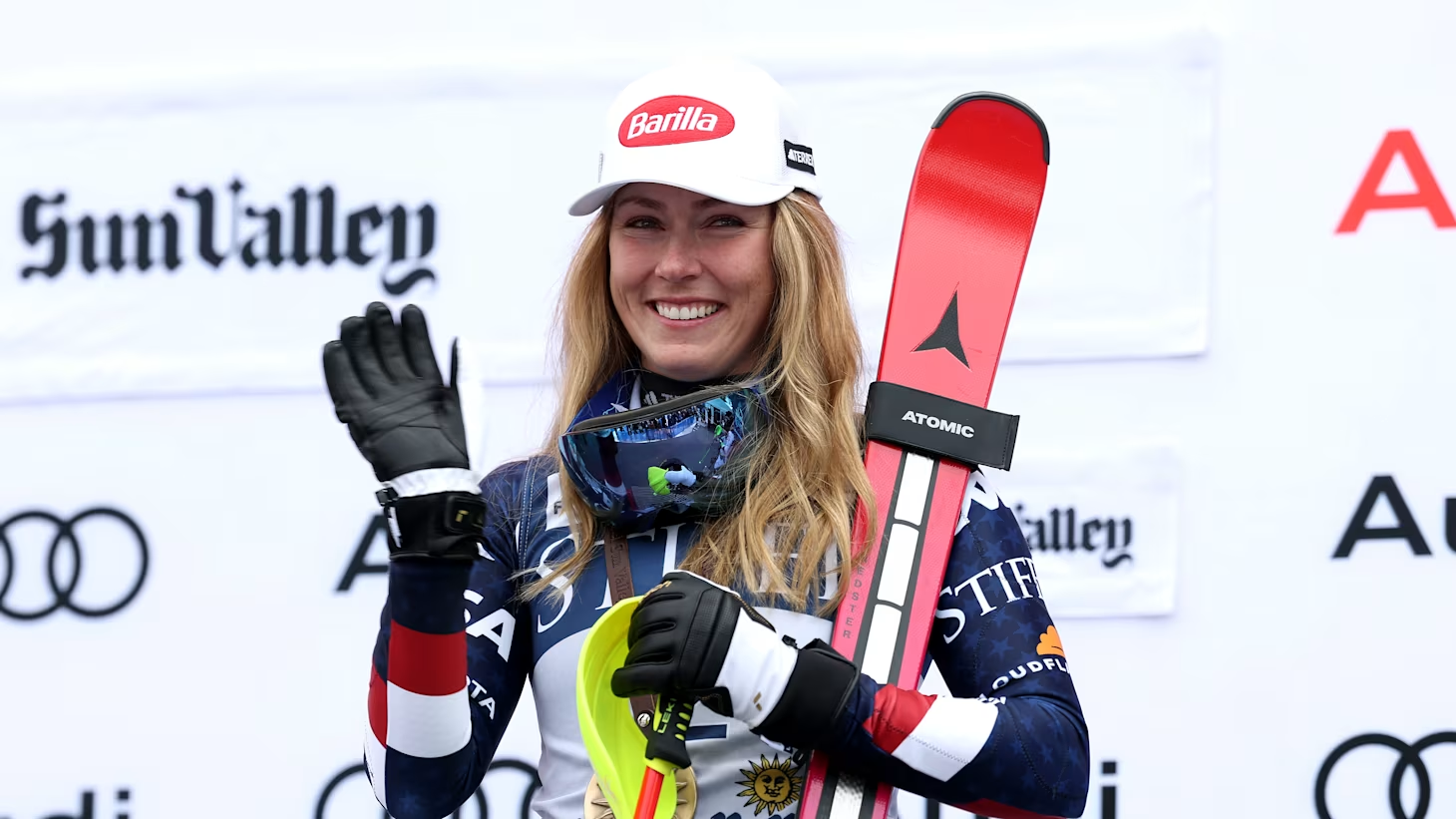
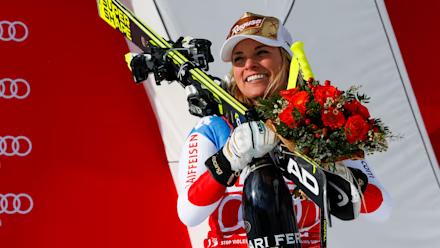
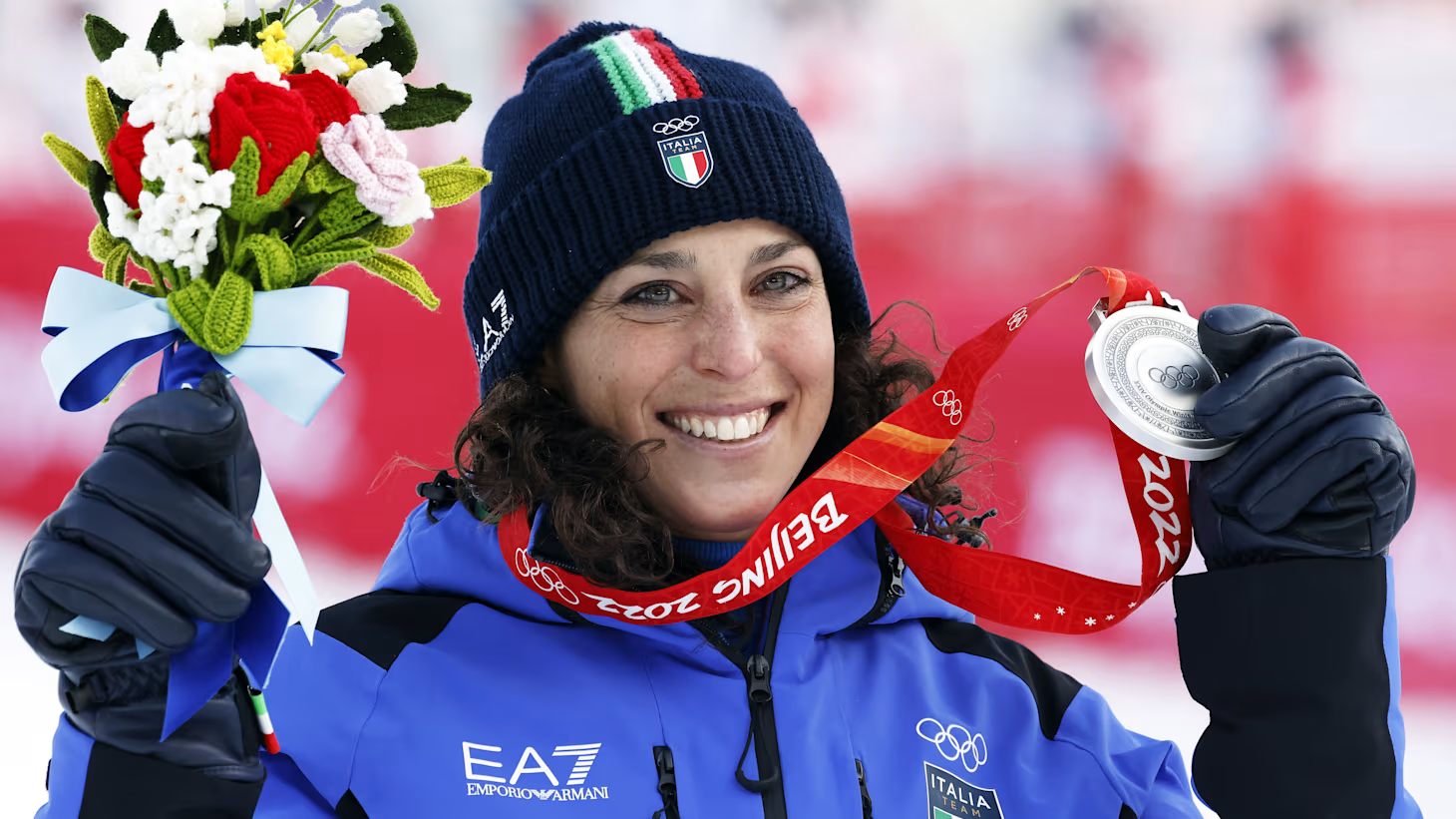
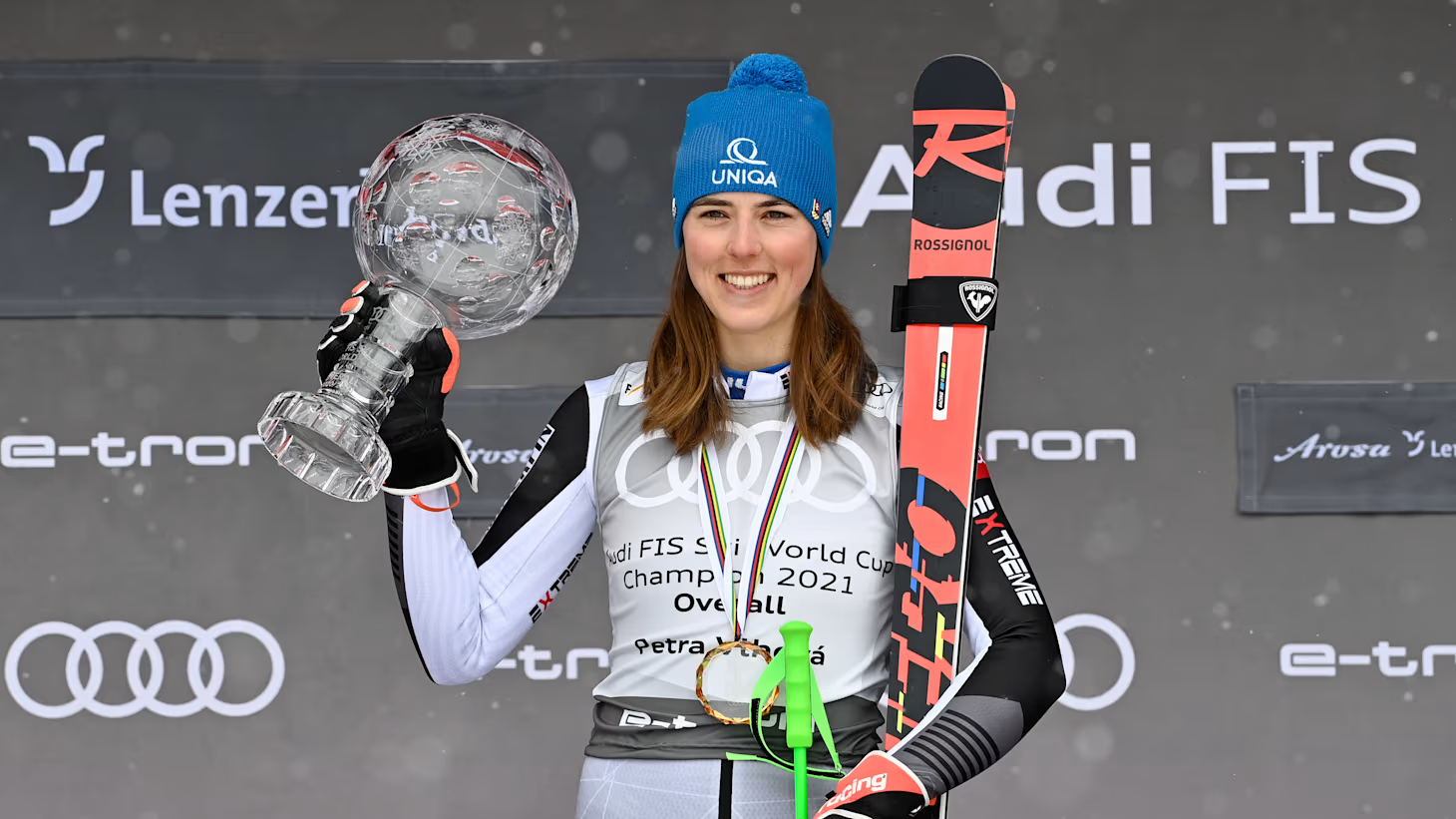
The four players above are active athletes who eligible to compete in the 2026 Winter Olympic Games.
Among the athletes listed in the table, four competitors stand out as currently active World Cup skiers eligible for the 2026 Winter Olympic Games: Mikaela Shiffrin, Lara Gut-Behrami, Federica Brignone, and Petra Vlhova. All four athletes have secured multiple Overall Crystal Globes, confirming their long-term presence at the highest level of alpine skiing. However, a closer reading of the table reveals meaningful differences in their competitive profiles when comparing total wins, podium finishes, and national representation. These variations suggest distinct career trajectories shaped by both individual performance patterns and broader competitive contexts.
Together, these athletes represent four nations with strong alpine skiing traditions, underscoring the relationship between national systems and elite performance. The table makes visible how success at the individual level is often supported by sustained national investment, competitive depth, and historical strength in the sport. Rather than presenting four identical paths to excellence, the data highlights multiple models of dominance, offering a useful foundation for comparing Olympic potential through both individual achievement and national context.
Example 2: National Context
Looking across the table, competitive success is not evenly distributed among nations. Austria, the United States, Switzerland, and Italy appear most frequently among top-performing athletes, indicating strong national presence at the elite level. High counts of wins and podium finishes suggest that these countries support sustained performance rather than isolated success.
Comparing nations also reveals different competitive patterns. Some countries concentrate results around a small number of dominant athletes, while others show success spread across multiple racers. By connecting individual athletes to national rankings and accumulated points, the table highlights how national systems shape consistency, depth, and overall Olympic potential heading into 2026.
Definitions